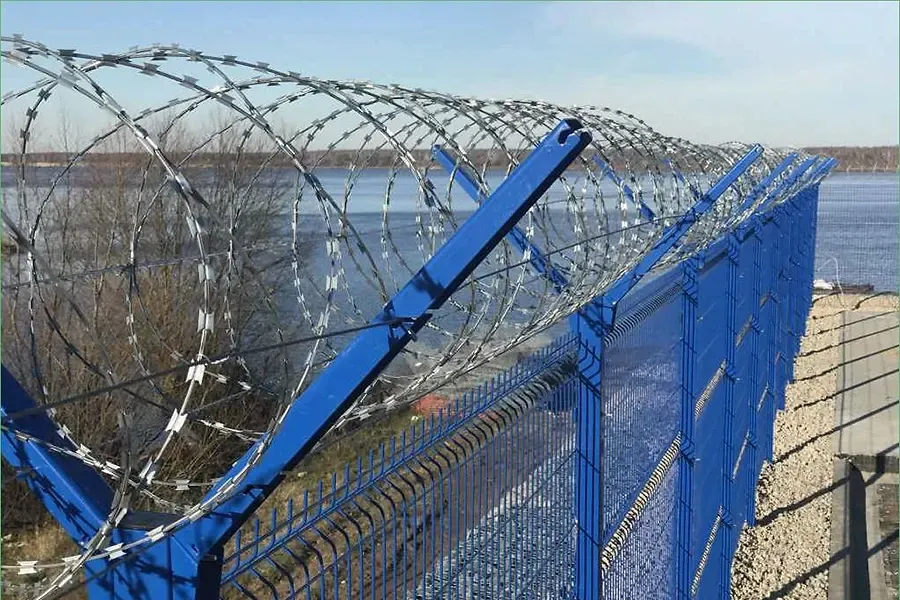
Barbed wire has remained one of the most widely used physical perimeter barriers in Europe for more than a century. Despite the rapid development of electronic security systems, video surveillance and smart detection technologies, mechanical obstacles still play a fundamental role. A physical barrier works continuously – regardless of power supply, connectivity or software. In modern European practice, barbed wire is not simply a legacy solution but a rational element of engineered perimeter protection, selected according to specific risk scenarios and operational requirements. Today the European market offers several categories of perimeter wire systems. They differ in construction, level of deterrence and resistance to unauthorized access. The correct choice depends on the nature of the facility, the surrounding environment and the expected threat level. In most real-world projects, barbed wire is integrated into a layered security concept: the barrier delays intrusion, detection systems identify it, and response measures neutralize it.
Traditional Barbed Wire – A Practical and Cost-Effective Solution
Traditional barbed wire consists of steel line wire with evenly spaced barbs twisted around the main strand. Historically associated with agriculture and large-scale fencing, it remains widely used across Europe. Its primary advantages are affordability, ease of installation and adaptability to different fence structures. This type of barrier is commonly mounted on posts, stretched in multiple strands along a perimeter or added to existing mesh and panel fences to reduce the risk of climbing. It is particularly suitable for agricultural land, storage yards, temporary boundaries and low-risk facilities where clear demarcation and basic deterrence are sufficient. However, traditional barbed wire mainly serves as a warning and light physical obstacle. With tools and preparation, it can be overcome relatively quickly compared to more advanced systems. For detailed technical information about classic solutions, see the section on barbed wire.
Modern Razor Wire – Enhanced Physical Protection
When higher resistance is required, modern razor-based systems provide a stronger deterrent effect. Unlike traditional twisted barbs, razor wire features sharp cutting elements formed from metal tape attached to a high-strength steel core. This significantly increases the barrier’s effectiveness and makes direct handling or cutting more difficult and risky. Modern razor wire is widely used across Europe on logistics centers, industrial sites, infrastructure facilities, warehouses and restricted areas. It can be installed in linear form, mounted on brackets above fences or integrated into modular perimeter systems. Its purpose is not only to injure or deter but to delay intrusion long enough for detection and response mechanisms to activate. Material quality is critical. European projects typically emphasize corrosion resistance, coating durability and predictable service life. Climatic conditions – coastal salt exposure, humidity, freezing cycles – strongly influence product selection. A deeper overview of advanced solutions is available in the razor wire section.
Concertina Wire – Volumetric Spiral Barrier
Concertina wire represents a three-dimensional spiral barrier made from razor wire. Instead of forming a single linear strand, it creates a volumetric obstacle that occupies physical space and significantly complicates crossing attempts. The spiral structure makes it difficult to step over, spread apart or cut quickly without injury and visible effort. Concertina systems are frequently installed on top of fences, along walls, around high-security zones or directly on the ground to form standalone barriers. In Europe they are common at ports, energy facilities, industrial complexes and other locations where perimeter delay time is critical. Their effectiveness depends not only on the material but also on proper installation – correct diameter, spacing, fixing method and elimination of weak access points. Because concertina adds depth to perimeter protection, it increases both physical resistance and psychological deterrence. More technical background on spiral systems can be found in the concertina wire section.
Why Barbed Wire Remains Relevant in Europe
European security strategies typically follow a layered defense model: physical barrier, detection, verification and response. Barbed and razor wire systems fit naturally into this structure. They reduce casual trespassing, clearly mark restricted boundaries and increase the effort required for deliberate intrusion. In most cases, wire systems are combined with mesh or welded panel fencing. The fence provides structural support while the wire acts as an upper reinforcement. On higher-risk facilities, multiple layers may be used to create controlled approach zones. The objective is not simply to block access, but to increase the time and difficulty associated with any breach attempt. Regulatory frameworks also influence product choice. Some European regions restrict aggressive barrier types in residential zones, while industrial and infrastructure sites permit stronger solutions. Therefore, compliance, safety signage and proper positioning are important aspects of any perimeter design.
Matching the Barrier to the Risk
Barbed wire in Europe ranges from traditional agricultural fencing to advanced razor and concertina systems used for high-security applications. Traditional barbed wire offers cost-effective boundary control, modern razor wire provides enhanced resistance, and concertina wire delivers maximum volumetric deterrence where delay time is essential. Effective perimeter protection is achieved not only by selecting the right product, but by proper engineering, material quality and integration into a comprehensive security system.